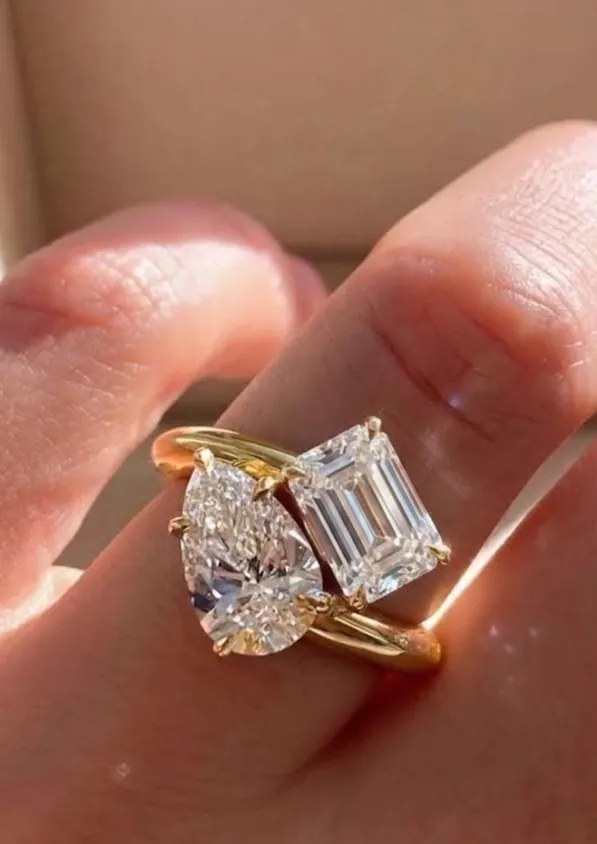
A toi et moi ring is one ring with two stones set together. The French name means “you and me”: each stone can represent one person, though the pairing can carry whatever meaning you give it. It works as an engagement ring or a ring worn for yourself, alone or beside a wedding band.
What makes a ring a toi et moi?
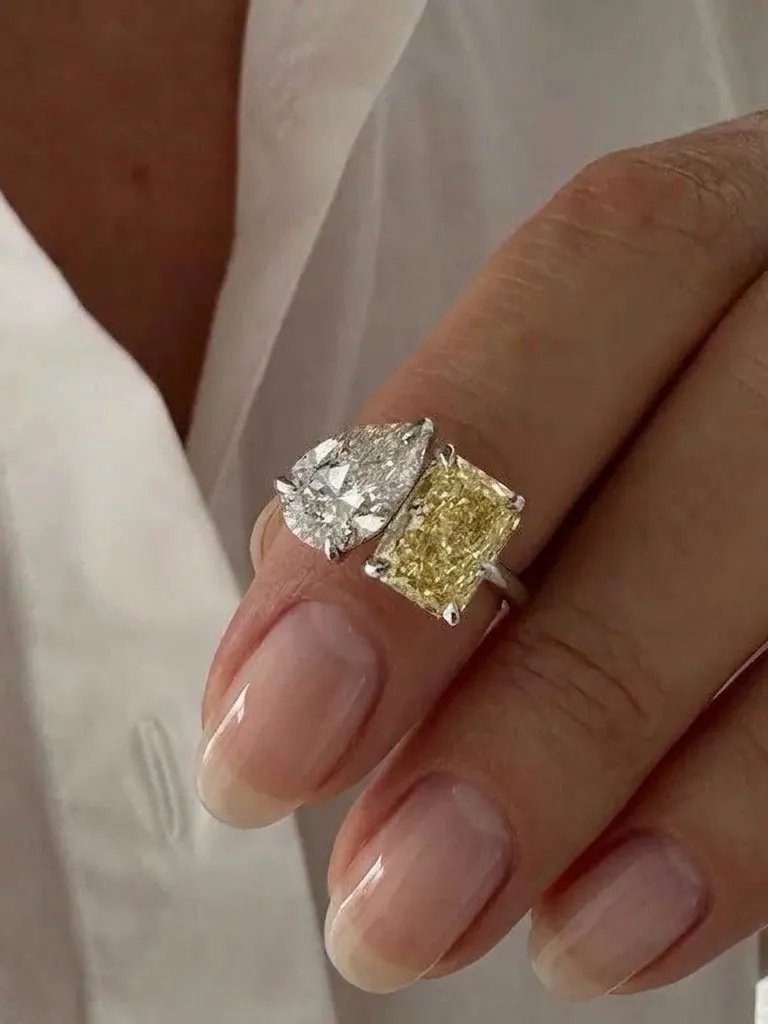
The defining detail is the pair of stones sharing one band. They may face each other, sit side by side or meet at an angle. One can be larger than the other. A matched pair can look deliberate and quiet; different outlines make the meeting point more noticeable. GIA’s guide to ring settings, checked 1 October 2026, describes both matching and contrasting stones in the style.
Traditionally, the two stones stand for two people. That gives the ring its name, though there is no fixed rule assigning a particular stone to either person. If one of you loves a pear shape and the other prefers the straight edges of an emerald cut, those choices can be the meaning. You could also choose the pair simply because you like how they look together.
The photographed ring on this page shows a pear shape beside an emerald cut. Their outlines differ, so the space where they meet becomes part of the design. A photograph can show that relationship from above; the side view matters just as much when you plan to wear the ring.
Where did the design come from?
Two-stone rings have a longer history than the current name might suggest. GIA describes a Victorian ring from around 1890 with a sapphire and a diamond as fitting the modern term toi et moi. Its history of antique engagement rings, checked 1 October 2026, also notes that the term can be applied to older rings of this form.
The best-known story is Napoleon Bonaparte’s engagement gift to Joséphine: a sapphire and diamond set together. GIA dates the gift to 1796, checked 1 October 2026. It is a useful example of the style, rather than proof that Napoleon invented it or that a toi et moi ring must contain those particular stones.
That history leaves room for a modern design. The two stones may differ in colour, cut and size, while the central idea remains easy to recognise: two distinct shapes held together on one ring.
Can you choose a toi et moi ring for an engagement?
Yes. A toi et moi ring can be the ring given at a proposal. The historical Joséphine ring was an engagement ring, and GIA still includes toi et moi among engagement ring styles (checked 1 October 2026). Its meaning does not depend on following a prescribed stone combination.
If you are choosing one for someone else, look at the rings they already wear. Do they like a single prominent stone, or do they mix shapes and colours? A two-stone design spreads attention across the finger. It can feel quite different from a solitaire even when neither stone is especially large.
Think about the wedding band before settling the engagement ring’s setting. Two stones may occupy more space across the finger than one, and a low setting can prevent a straight band from sitting close. You can still choose that low profile if you like it. Knowing how the rings will sit together lets you make the choice deliberately.
A toi et moi ring need not mark a proposal. It can be a gift, an anniversary ring or a ring you buy for yourself. The name offers an interpretation; the occasion belongs to you.
Which two stones work together?
Start with shape and visible size. A pear next to an emerald cut gives you a curved outline against straight edges. Two pears can point toward each other or face in opposite directions. An oval beside a round makes a subtler pair, with the difference appearing mainly in length.
Carat weight alone will not tell you how balanced two stones look on a hand. Ask for each stone’s length and width in millimetres and compare them at the scale they will have in the ring. Our guide to why stones of the same carat weight can look different sizes explains why the measurements matter.
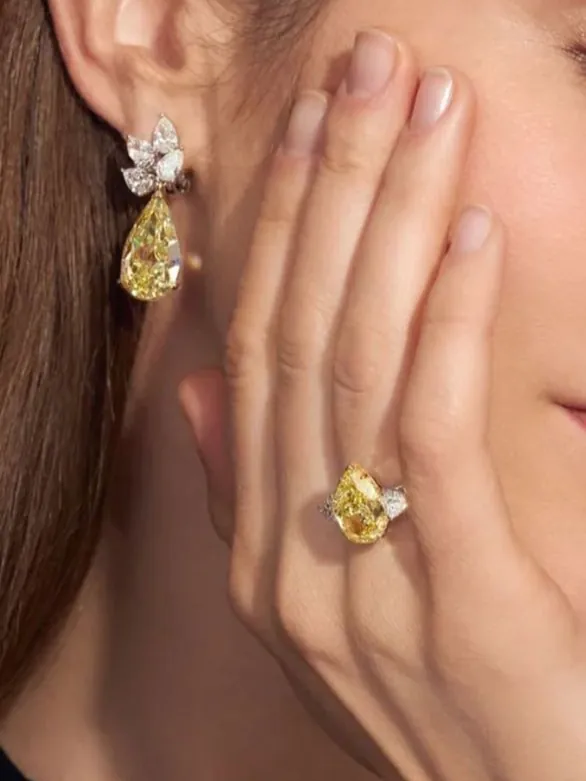
Colour changes the relationship too. A coloured stone beside a white one gives each a distinct role. Two white stones put more emphasis on outline and setting. There is no need to make the stones identical to justify the name: GIA’s setting guide, checked 1 October 2026, describes variation in shape, size and colour as part of the style.
Before choosing from photographs, look for a view from above and one from the side. From above, check the gap between the stones and whether their angles feel balanced. From the side, check how high each setting rises and where the band joins it. Those details affect both the look and what can sit beside the ring.
How do you wear a toi et moi ring?
Wear a toi et moi ring wherever it feels comfortable and meaningful to you. As an engagement ring, it can sit on the ring finger with or without a wedding band. GIA’s guide to wearing engagement and wedding rings, checked 1 October 2026, describes wearing them together, separately or one at a time.
On its own, the two-stone ring has enough detail to hold the finger visually. Give both stones a look when your hand is relaxed, rather than judging the ring only in a tightly framed photograph. If you prefer several rings, try the toi et moi with a plain band first. That makes it easier to see whether another stone-set band adds something you want or crowds the two main stones.
There is no required order for an engagement ring and wedding band. The traditional arrangement places the wedding band closer to the hand, but comfort and fit can lead you to reverse them or wear them on different fingers. Check whether the two-stone ring turns as you move your hand, especially if its settings extend farther to one side.
Can a toi et moi ring sit with a wedding band?
Yes, although the answer for a particular pair of rings depends on their shape and height. Hold a straight wedding band beside the toi et moi ring and look for contact with the settings. If the band touches a stone, catches under a prong or leaves a gap you dislike, try another shape before choosing the set.
| Wedding band option | What to check |
|---|---|
| Straight band | Does it sit where you want it without pressing against either setting? A small gap can look intentional. |
| Curved band | Does its curve follow both stones closely enough, and will you like its shape when worn alone? |
| Open band | Do the ends sit securely beside the two-stone ring without catching? |
| Separate fingers | Are both rings comfortable when you wear them independently? |
A curved band can follow the outline of a low or wide two-stone setting. That curve is specific to the ring it accompanies, so check it from above and from the side. If you expect to wear the wedding band by itself often, decide whether you like its shape alone as well as in the pair.
A visible gap is also an option. Trying to close every gap can lead to a band shape you enjoy less. GIA’s ring stacking guide, checked 1 October 2026, recommends considering the proportions, comfort and fit of the complete stack. The useful test is the set on your hand, with enough room for your fingers to move comfortably.
What should you check for everyday wear?
Look at the exposed edges of both stones and at anything likely to catch on clothes. GIA explains that a bezel wraps metal around a stone’s edge, while prongs leave more of the stone visible. Both can be used for a toi et moi ring; the setting guide, checked 1 October 2026, describes the protection and appearance each provides.
The choice of coloured stone matters as well. A sapphire is suited to many rings worn regularly, according to GIA’s sapphire care guide (checked 1 October 2026). A gemstone’s scratch resistance is only one part of durability: GIA also considers toughness and stability (checked the same day). Ask about the care of the specific stone you choose, particularly if you want to wear the ring every day.
Finally, consider the band beneath the stones. Two large settings on a very slender band may look light in a close-up image, but the ring still needs to feel steady on your finger. Try to judge the proposed width, side profile and fit as a whole. The stone pairing is what catches your eye; the construction is what you will live with.
How would you plan a custom toi et moi ring?
Bring the part of your idea you know. That might be two stone shapes, a colour pairing, a saved photograph or the wedding band you want to wear beside it. We make new pieces from a photo or idea, subject to what can be made; we do not remodel an existing ring. Our guide to starting a ring from a photograph explains which details help turn a reference into a design discussion.
If you are considering lab-grown diamonds for both stones, start with the lab-grown diamond engagement ring options. For the two-stone shape itself, the custom toi et moi engagement ring page is the more focused place to compare designs.
At ENBOM DIAMONDS, 18ct gold is standard and 14ct is available on request. Our 18ct and 14ct gold guide can help you choose a metal before asking for a quote. Tell me if an existing wedding band needs to sit beside the new ring, and send views of it from above and the side. The gap, setting height and band shape can then be considered together.
For a centre stone of 0.30 carat or more, an independent laboratory report is included in the price. Our lab-grown stones come with IGI reports and natural stones with GIA reports; smaller, side and pavé stones are not individually reported. Those are questions to settle for the stones in your proposed ring, rather than assuming that two stones always come with two reports.
Where won’t this article help you?
A description of the toi et moi style cannot tell you whether two particular stones will look balanced once set, or whether your wedding band will fit against a ring you have only seen from above. Those decisions need the dimensions and side views of the proposed pieces. A photograph of someone else’s ring can start the conversation, but it cannot supply the measurements of yours.
The historical meaning cannot decide what the two stones ought to represent for you, either. You may care about the “you and me” idea, have another meaning in mind or simply like the design. Choose the pairing you would want to see on your hand.
Explore custom engagement rings or message me on WhatsApp with the two shapes you are considering and a photo of any band you want to wear beside them.
Questions
What does a toi et moi ring mean?
Toi et moi means 'you and me' in French. The ring has two stones on one band, traditionally representing two people. The stones can match or differ in shape, size or colour; you can decide what each one means to you.
Can a toi et moi ring be an engagement ring?
Yes. Two-stone rings have been given for engagements for centuries. Napoleon Bonaparte gave Joséphine a sapphire-and-diamond toi et moi engagement ring in 1796, according to GIA. The design can also be worn without any engagement meaning.
What wedding band goes with a toi et moi ring?
Start by trying a straight band beside the ring. If the two settings block it, consider a curved band shaped around them, accept a small visible gap, or wear the rings on separate fingers. Check the fit from above and from the side.
Do the two stones have to be the same?
No. Two stones of different shapes, sizes or colours can still form a toi et moi ring. Compare their visible dimensions and the space between them, then consider how their settings will feel during daily wear.
Sources
- GIA: Guide to Engagement Ring Settings Checked 1 October 2026
- GIA: Colored Gemstone Engagement Rings Buying Guide Checked 1 October 2026
- GIA: Explore Antique Engagement Ring Styles Checked 1 October 2026
- GIA: How to Wear Your Engagement Ring and Wedding Band Checked 1 October 2026
- GIA: Ring Stacking Guide Checked 1 October 2026
- GIA: More than the Mohs Scale: Gem Durability Checked 1 October 2026
- GIA: Sapphire Care and Cleaning Guide Checked 1 October 2026