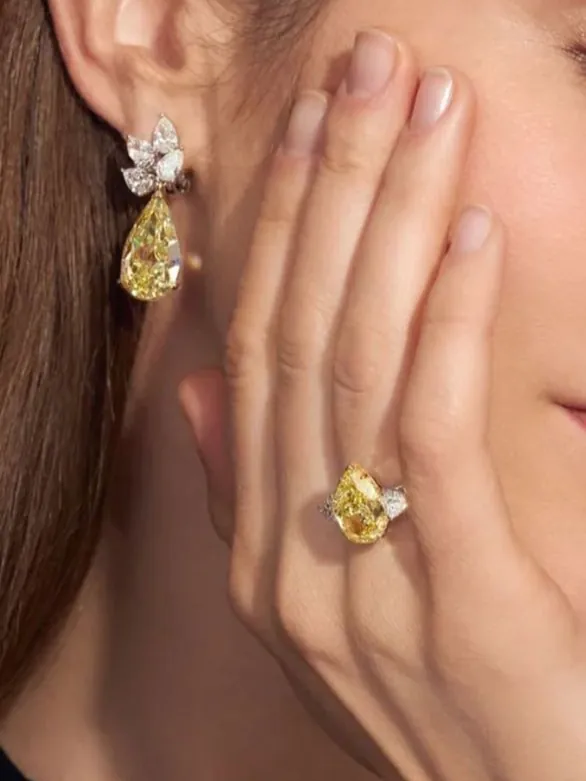
18ct gold (18K, 750) is 75% gold; 14ct (14K, 585) is 58.5%; 9ct (375) is 37.5%. For an everyday ring, 18ct offers a richer yellow colour, while 14ct is generally harder-wearing and costs less. ENBOM DIAMONDS makes 18ct pieces as standard and can make 14ct on request.
What do 18ct, 14ct and 9ct mean?
The number of carats tells you how much of the metal is gold. The rest is made up of other metals, which change the alloy’s colour and working properties. A purity stamp expresses the gold content in parts per thousand. The World Gold Council’s guide to gold jewellery, checked 28 September 2026, lists these common marks:
| Gold alloy | Gold by weight | Other metals by weight | Common purity mark |
|---|---|---|---|
| 18ct | 75% | 25% | 750 |
| 14ct | 58.5% when marked 585 | 41.5% | 585 |
| 9ct | 37.5% | 62.5% | 375 |
There is a small arithmetic wrinkle with 14ct. Fourteen parts out of 24 equals about 58.3%, which explains why some descriptions say 583. Many makers use the slightly higher 585 standard instead. The World Gold Council says 585 is the mark found on most 14ct jewellery. It is still 14ct gold, not a different category.
The carat number describes purity, not the weight of the ring. It also does not tell you which other metals were used. Two rings can both be stamped 750 and have visibly different shades of yellow.
Will 18ct and 14ct look different?
In yellow gold, 18ct usually has a deeper gold colour because more of the alloy is gold. The difference can be clear when two plain bands sit side by side. The exact shade still depends on the other metals in each band, so a photograph is a poor way to judge a small colour difference. GIA’s engagement-ring guide, checked 28 September 2026, explains that alloying metals affect colour as well as strength.
Rose gold gets its pink tone mainly from copper. Its shade can vary between makers even at the same purity. If you are matching a new ring to one you already wear, compare the actual metals rather than assuming every 18ct rose gold will match. The World Gold Council, checked 28 September 2026, gives different typical copper proportions for 14ct and 18ct rose gold and notes that makers can use other mixtures.
White gold needs a different comparison. Makers mix gold with white metals, and many white gold rings receive a bright rhodium coating. That coating can make 14ct and 18ct look much alike when new. It wears gradually, so the warmer colour of the metal beneath may become visible and the ring may need replating. GIA describes both the alloys and the coating in its guide to gold engagement rings, checked 28 September 2026. Before choosing white gold, ask which alloy and surface finish the jeweller intends to use.
Is 14ct gold better for a ring worn every day?
14ct is generally the harder-wearing choice if you are comparing it with 18ct, but neither purity makes a ring scratch-proof. Gold becomes more suitable for jewellery when mixed with other metals. GIA says both 14ct and 18ct alloys are suitable for everyday rings, while the result depends on the alloy’s composition (GIA, checked 28 September 2026).
That distinction matters when someone calls 18ct “too soft” for an engagement ring. GIA lists both 14ct and 18ct as good choices for gold engagement rings. Higher gold content generally means a softer metal that is somewhat more prone to dents and scratches, according to its engagement-ring advice, checked 28 September 2026. It does not follow that an 18ct ring will fail under ordinary wear.
Think about the whole ring as well as its purity. A raised stone and its setting have their own exposure to knocks; changing 750 to 585 does not answer every question about how that design will wear. GIA notes that settings offer different levels of protection and that prongs can loosen with wear (GIA, checked 28 September 2026). If a ring will be worn through hands-on work, show the jeweller how you intend to wear it when you discuss the design.
What about 9ct gold?
9ct gold, commonly marked 375, contains 37.5% gold by weight. It is a familiar lower-purity option in Australian jewellery, below 14ct (585) and 18ct (750). That makes it worth considering when comparing prices, but the smaller gold content does not settle how a particular ring will look or wear (World Gold Council, checked 1 October 2026).
A 9ct ring generally uses less gold than the same weight of 14ct or 18ct alloy, which can reduce its metal cost. Its other metals affect its colour and working properties. Yellow 9ct may look less richly gold than 18ct; in white or rose gold, the alloy and any surface finish can matter more to what you see. More alloying metal does not make every 9ct ring stronger than every 18ct ring. GIA advises judging durability by the alloy and the ring’s design as well as its carat number (GIA, checked 1 October 2026).
ENBOM DIAMONDS makes 18ct gold as standard and 14ct on request. We do not list 9ct as an available metal, so do not assume we can quote your design in 9ct. If you are comparing a 9ct offer elsewhere with ours, ask for the full metal specification, the finished weight and the same stone and setting details. A lower carat number alone is not a like-for-like price comparison.
What about sensitive skin and white gold?
A higher carat number alone cannot tell you whether a ring will suit sensitive skin. White gold may contain nickel, while other white gold alloys use metals such as palladium. GIA advises people with a nickel allergy to avoid white gold alloyed with nickel (GIA, checked 28 September 2026).
Ask what is in the particular alloy before ordering a white gold ring. “18ct white gold” tells you that 75% of the alloy is gold; it does not identify every metal in the remaining 25%. GIA also identifies palladium-alloyed white gold as an option for sensitive skin in its everyday-ring guide, checked 28 September 2026. If you already know a metal causes a reaction, name it when you ask about the composition. Do not rely on the colour or a rhodium coating to identify what is underneath.
How much more gold is in 18ct, and does the ring cost 28% more?
At the same total metal weight, 18ct marked 750 contains about 28% more gold than 14ct marked 585. The calculation is 0.75 ÷ 0.585 ≈ 1.28, using the fineness figures in the World Gold Council’s guide, checked 28 September 2026. If two otherwise identical rings each used one gram of alloy, the 18ct ring would contain 0.75 grams of gold and the 14ct ring 0.585 grams.
That does not mean the finished 18ct ring must cost 28% more. A finished quote also accounts for the particular design, its stone and the work required to make it. Even the assumed equal metal weight may not hold for two finished versions of a design. The useful comparison is a quote for the same proposed ring in each alloy, with the metal and stone specifications stated.
ENBOM DIAMONDS gives you a quote before you pay anything. If you are deciding between 18ct and 14ct, ask for both options at the quote stage. Our article on custom jewellery costs gives two real quoted examples, but neither is a matched 18ct-versus-14ct price comparison.
What do the 750, 585 and 375 stamps prove?
The three-digit number states the gold fineness: 750 for 18ct, 585 for the common 14ct standard and 375 for 9ct. It does not, on its own, identify the maker or show that an independent laboratory tested the finished piece. The World Gold Council, checked 28 September 2026, explains the fineness numbers; the Gold & Silversmiths Guild of Australia, checked the same day, explains that marks can convey different information about a piece, including its maker and material.
At ENBOM DIAMONDS, 18ct pieces are stamped 750. A testing laboratory in China checks the finished piece and issues a certificate for it. That finished-piece certificate concerns the jewellery; it is separate from any grading report for a centre stone. Ask to see the marking and the relevant documents for the particular piece rather than treating a photograph of a 750 stamp as the whole answer.
We make 18ct gold as standard and 14ct on request. If you prefer 14ct, say so when you send your reference so the metal can be specified in the quote. You can start with a photo, a link or an idea for a piece inspired by your reference. The custom-ring timeline explains what happens after you decide to go ahead.
Where this comparison stops helping
The 750-versus-585 calculation compares gold content. It will not choose between gold and platinum or silver, because those are different metals with different properties. GIA discusses their wear and appearance separately in its guide to everyday ring materials, checked 28 September 2026.
Purity also settles little about the long-term appearance of rhodium-plated white gold. The coating is the surface you first see, and it wears over time, as GIA explains in its white-metal guide, checked 28 September 2026. Ask about the alloy and finish if a lasting bright white appearance is your main reason for choosing a metal.
For a yellow-gold ring, choose 18ct if its colour and higher gold content matter most to you; ask to compare 14ct if wear and price weigh more heavily. Send me the design you have in mind and which metal you prefer, and we will quote the piece before you pay anything. Get in touch.
Questions
Is 18ct gold worth it for an engagement ring?
18ct gold is a good choice if you want a richer yellow colour and a higher gold content. It is suitable for everyday rings, although it is generally softer than 14ct and will pick up signs of wear. If you prefer a lower price or expect your ring to take frequent knocks, ask to compare the same design in 14ct.
What does 750 stamped on gold mean?
750 means the metal contains 750 parts gold per 1,000 parts of alloy, or 75% gold by weight. That is 18ct gold. The number tells you the stated purity, not who made the piece or whether an independent laboratory tested it. Ask for the maker's details and any available test documentation separately.
Is 14ct gold real gold?
Yes. Jewellery marked 585 contains 585 parts gold per 1,000, or 58.5% gold by weight. The remaining metal is an alloy chosen partly for colour and working properties. You may also see 14K or, less commonly, 583. The 585 mark is the common slightly higher fineness used for 14ct jewellery.
Does 18ct gold scratch more easily than 14ct?
Generally, 18ct gold is softer and somewhat more prone to scratches and dents. The exact result depends on the metals mixed with the gold and on the ring's design, so the purity number cannot predict every mark it will acquire. Both 14ct and 18ct gold are used for rings worn daily.
Sources
- Gold Jewellery: Colour, Carat & Purity | World Gold Council Checked 1 October 2026
- Guide to White, Yellow, and Rose Gold Engagement Rings | GIA 4Cs Checked 28 September 2026
- Best Ring Material for Everyday Wear | GIA 4Cs Checked 1 October 2026
- White Metal Options for Your Engagement Ring | GIA 4Cs Checked 28 September 2026
- About makers marks | Gold & Silversmiths Guild of Australia Checked 28 September 2026