Yes. Lab-grown diamonds are real diamonds: they have essentially the same crystal structure and physical and optical properties as natural diamonds, but grew in a controlled setting. A basic diamond tester can give a diamond reading on a lab-grown diamond; it cannot establish origin. A jeweller needs specialist screening or a laboratory report to answer that.
This explanation was checked against GIA and IGI on 1 October 2026. The distinction is between identifying the material and identifying its origin. Those are separate tests, and the word “pass” often blurs them.
Are lab-grown diamonds real diamonds or imitations?
A lab-grown diamond is diamond material. GIA describes natural and laboratory-grown diamonds as having the same carbon crystal structure and nearly the same chemical, optical and physical properties. Their origins differ: one formed in the Earth; the other grew in a controlled environment. That difference matters when a stone is described and sold, even though it may be impossible to see by eye. GIA explains the material and origin.
Moissanite and cubic zirconia are different materials used to resemble diamond. GIA classifies them as simulants. A lab-grown diamond is not in that category. If a listing calls a stone “real” without saying whether it is natural or lab-grown, ask for its origin in writing. The answer affects what you are being offered, while the shine under shop lights will not settle it.
The name should travel with the stone. If you choose a lab-grown diamond, the description, quote and grading report should all say so. “Real” alone is too broad to tell you what you are buying. Equally, “natural” is a claim about origin, not a synonym for “better looking.”
How are lab-grown diamonds made?
The two main growth methods are high pressure, high temperature (HPHT) and chemical vapour deposition (CVD). In HPHT growth, carbon crystallises under intense heat and pressure. In CVD growth, carbon from a gas deposits onto a diamond seed. Both produce diamond, but the different growth conditions leave features that a specialist can investigate. GIA describes both methods, checked 1 October 2026.
A polished stone does not keep the obvious outer shape of its rough crystal. This is why a person cannot reliably identify CVD, HPHT or natural origin just from the outline of a finished oval or round stone. GIA says that growth-related differences can remain in the crystal as patterns and atomic-level defects. Those clues require appropriate equipment and interpretation.
Growth method is also different from cut. “Oval” describes the shape and cutting style you see; “CVD” describes how the crystal grew before cutting. A grading report may state growth method and post-growth treatment where that information is available. If either detail matters to your choice, ask for the report and read its comments rather than guessing from the appearance.
Do lab-grown diamonds pass a diamond tester?
A lab-grown diamond can register as diamond on an ordinary tester. The result is consistent with its material: it does not turn a lab-grown diamond into a natural one. GIA says older “diamond detectors” and traditional gemmological observations cannot separate natural from laboratory-grown diamonds because their properties are so similar. GIA’s identification guide was checked 1 October 2026.
Many hand-held testers use a thermal response to help separate diamond from some lookalikes. Imagine the shop demonstration: the probe touches the stone, the light or sound indicates “diamond”, and someone calls the question answered. The demonstration has addressed one question about material. It has not established geological origin, identified the exact stone on an invoice, or checked a report number.
Ask which instrument was used and what its result means. “Diamond” on a basic tester and “natural” on a specialist origin screener are different claims. If the seller promises a natural diamond, a tester that merely recognises diamond material is too narrow a check. If the seller offers a lab-grown diamond, the same reading should not be presented as proof of natural origin.
A tester’s exact behaviour also depends on its design and correct use. Do not treat a single beep as a universal guarantee. The useful question after a positive reading is: what evidence identifies this stone’s origin?
Can moissanite give a confusing tester result?
Yes. Moissanite is a simulant with some properties close to diamond, including thermal conductivity. GIA notes that instruments using that property to distinguish diamond from many simulants can sometimes lead to confusion with moissanite. GIA documented a moissanite with a misleading diamond-report inscription; laboratory examination identified the material. GIA’s case report was checked 1 October 2026.
This is another reason to ask what a particular device tests. A reading from a thermal probe is not the same as a full identification. It may help a jeweller decide which checks to perform next, but it cannot replace a grading laboratory when the stone’s material or origin is disputed.
Home tests are worse evidence. Scratching a stone risks damage, while fog and newspaper tests change with conditions and the stone’s cut or setting. GIA advises against using those observations as definitive identification. You do not need to risk a ring to find out what the seller should be able to document.
Can a jeweller tell a lab-grown diamond by looking at it?
Usually, a jeweller cannot establish lab-grown versus natural origin by sight alone. GIA says the two can look indistinguishable and that a loupe is not a reliable origin test for a polished stone. A skilled jeweller can inspect workmanship, read an inscription and notice a reason for further examination. Those useful skills should not be mistaken for a conclusive origin result. GIA’s buyer guide makes that limit clear.
A jeweller with suitable specialist equipment may be able to screen a loose or mounted stone. The key is the equipment and the result it produces. Ask whether the jeweller has performed origin screening, has only used a basic diamond tester, or is relying on a report supplied with the stone.
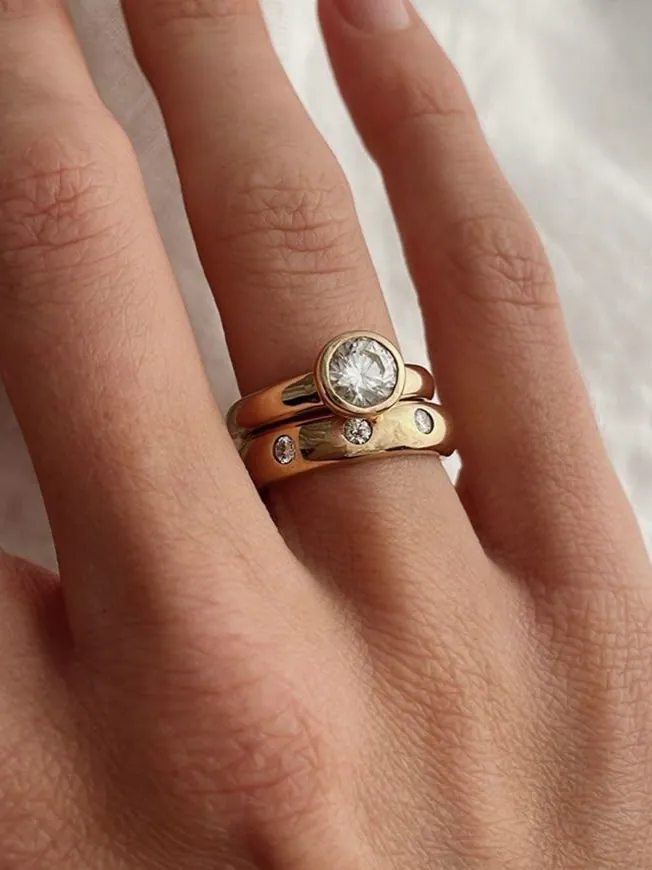
The same caution applies to photographs. An image can help you judge the outline, setting and how a ring sits on a hand. It cannot show the growth features that determine whether the centre stone is natural or lab-grown. A clear photograph of a report is useful for reading the number, but the report still has to be matched to the actual stone.
What can specialist screening tell you?
Specialist screening looks for properties linked to growth history. GIA explains that natural and lab-grown crystals contain different distributions of atomic-level defects. Its laboratory uses advanced gemmological and spectroscopic methods to identify origin. The GIA iD100 is one example of a desktop screener for jewellers, distinct from a basic pen-style tester. GIA describes its screening methods, checked 1 October 2026.
The iD100 gives “Pass” for a natural diamond and “Refer” for a stone needing more testing, according to GIA’s instrument description, checked 1 October 2026. “Refer” is not a final label of “lab-grown”: the instrument also screens simulants and some treated stones. The operator should explain the result and arrange any follow-up needed to identify the specific stone.
An independent gemmological laboratory can make the fuller assessment. IGI says it screens submitted stones for natural, laboratory-grown or simulant origin before grading. It then records the assessed characteristics in a report. IGI’s grading process was checked 1 October 2026. If a purchase depends on origin, ask for that level of documentation rather than a shop demonstration alone.
What does an IGI report prove, and what should match?
An IGI laboratory-grown diamond report records IGI’s assessment of a particular submitted stone, including its lab-grown origin and grading details. IGI describes measurements, shape, carat weight, colour and clarity among the details a buyer can compare. It also says a grading report is not a valuation. IGI’s report guide was checked 1 October 2026.
Start with the report number. Look it up yourself through IGI’s Verify Your Report service and compare the digital record with the document offered by the seller. Check the origin statement first, then the shape, measurements, weight and grades. The step-by-step IGI report check covers what to do if a field differs.
The report must also belong to the stone you receive. IGI says it automatically applies an origin-identifying laser inscription to laboratory-grown diamonds it grades. Ask the jeweller to locate the girdle inscription under magnification and compare it with the report information. A mounted stone’s setting may make that edge harder to see; arrange the check before setting if visibility will be a problem. IGI explains its inscription and online record process, checked 1 October 2026.
A matching number is useful, though it is not an absolute defence against fraud. IGI published a case in which a laboratory-grown stone carried an inscription corresponding to a natural diamond’s report. Laboratory testing exposed the mismatch. That is an unusual case, but it shows why a report lookup, physical match and independent origin assessment answer different questions. IGI’s case report was checked 1 October 2026.
What should you ask before buying a lab-grown diamond ring?
Ask what the centre stone is, which independent report covers it, and how the reported stone will be matched to the finished ring. Then ask for the cut and measurements, rather than relying on carat weight alone. Two stones of the same weight can have different dimensions and appear different sizes from above. Our guide to stones of the same carat weight explains that comparison.
At ENBOM DIAMONDS, our policy is IGI reports for lab-grown diamonds and GIA reports for natural diamonds. A centre stone of 0.30 carat or more comes with an independent laboratory report included in the price. Smaller centre stones, side stones and pavé stones are not individually reported. Ask which stone any document covers when a ring contains several stones.
An origin report and a finished ring also answer different questions. The stone report describes the submitted stone; it does not grade the setting or tell you whether the claws are well finished. If you are comparing a lab-grown option with a natural one, our IGI or GIA guide explains the different report paths. When you discuss a design with me, send the shape and size you have in mind so the quote can identify the proposed centre stone clearly.
Where will this article not help you?
This article cannot identify an unreported stone in a ring you already own. A photograph, a diamond-tester reading or an inscription viewed in isolation may leave its origin unresolved. If you need a conclusive answer about that particular stone, ask a qualified jeweller what screening is available and whether a gemmological laboratory must examine it.
“Real” also does not answer what a stone is worth now, what it might sell for later, or whether a particular production claim is justified. An IGI grading report documents assessed characteristics, not an appraisal. Our guide to lab-grown diamond resale covers the separate value question. For claims about environmental impact or sourcing, ask for evidence specific to the stone and producer. A diamond reading on a tester cannot settle either question.
How can you choose a lab-grown diamond for a new ring?
Start with the stone’s shape, size and the setting you want to wear. Our lab-grown diamond guide covers the broader category. For a ring, see the lab-grown diamond engagement rings page or start with custom engagement rings and a photo or idea. I can use your reference to discuss the centre stone and ring before we quote the piece.
Send me the reference and tell me whether you want a lab-grown or natural centre stone. Message me on WhatsApp.
Questions
Are lab-grown diamonds real diamonds?
Yes. A lab-grown diamond has essentially the same carbon crystal structure and physical and optical properties as a natural diamond. The difference is origin: one grew in a controlled setting and the other formed in the Earth. Moissanite and cubic zirconia are different materials.
Do lab-grown diamonds pass a diamond tester?
A lab-grown diamond can give a diamond reading on a basic tester because it is diamond material. That reading cannot tell you whether the stone is natural or lab-grown. Ask what the device tests and use specialist origin screening or an independent laboratory report for the origin question.
Can a jeweller tell if a diamond is lab-grown?
A jeweller cannot reliably determine natural versus lab-grown origin by sight or with a standard diamond tester. A jeweller with suitable screening equipment may identify a stone that needs further testing; an independent gemmological laboratory can assess its origin.
Does an IGI report prove a lab-grown diamond is the stone I bought?
An IGI report documents the stone IGI assessed. Check its number in IGI's online record, compare the grades and measurements, and ask a jeweller to match the girdle inscription to your actual stone under magnification. A report lookup alone does not match paperwork to the stone.
Sources
- Simulants, Moissanite and Lab-Grown Diamonds | GIA Checked 1 October 2026
- Is There a Difference Between Natural and Laboratory-Grown Diamonds? | GIA Checked 1 October 2026
- How to Tell if a Diamond Is Real | GIA Checked 1 October 2026
- Synthetic Moissanite with Fraudulent GIA Inscription | GIA Checked 1 October 2026
- GIA iD100 Gem Testing Device | GIA Checked 1 October 2026
- Lab Grown Diamond Report & Certification For Authenticity | IGI Checked 1 October 2026
- Diamond Grading Process & Quality Scale For Assessment | IGI Checked 1 October 2026
- IGI Uncovers Fraudulent 6ct Lab Grown Diamond with Natural Diamond Inscription Checked 1 October 2026