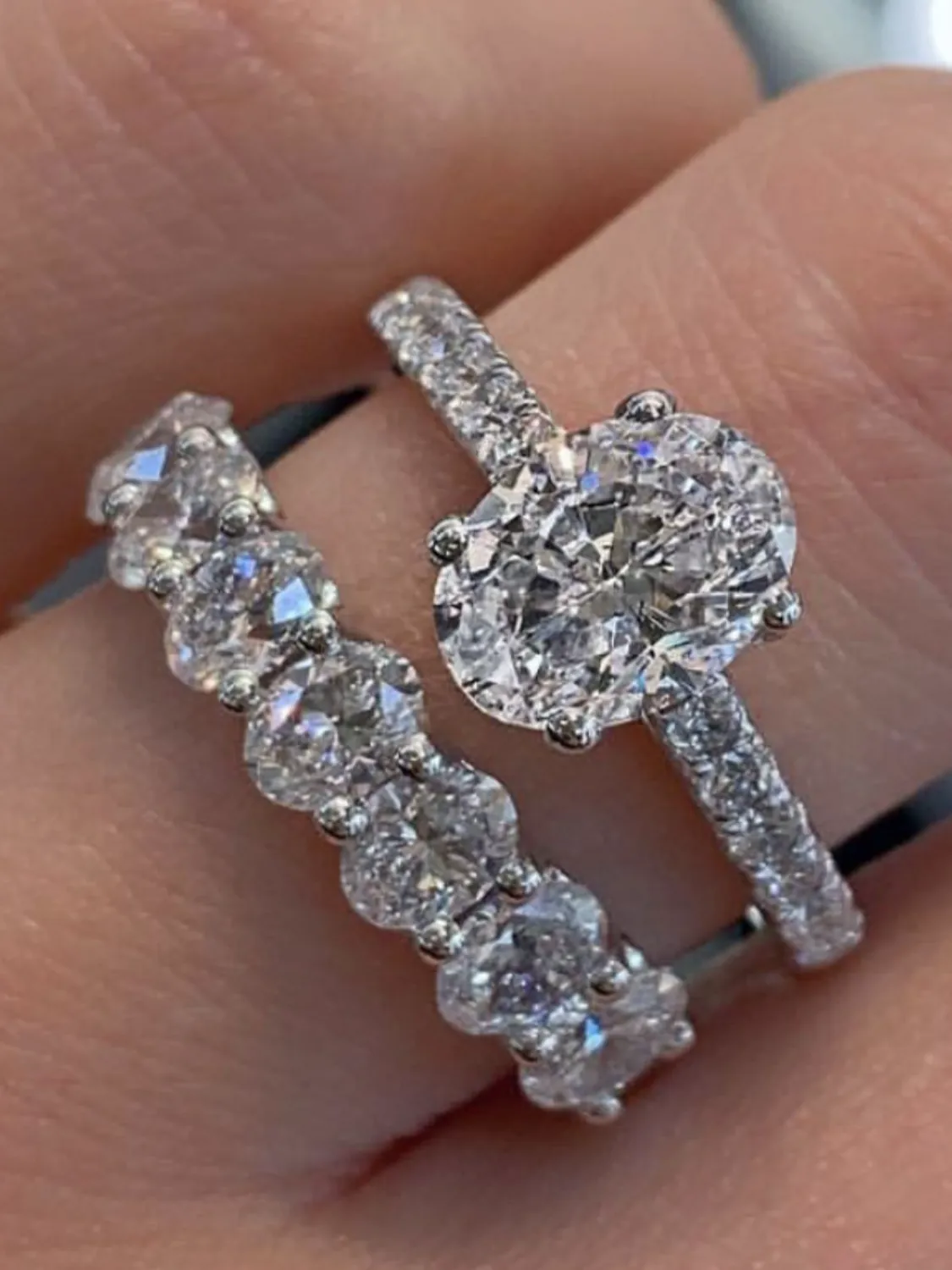
Lab-grown diamonds can be resold, but they rarely recover their original retail price. The resale value of a lab-grown diamond depends on the offer a buyer will make for that specific stone or finished piece. Falling new-stone prices put further pressure on second-hand offers. Buy for the design and years of wear; treat resale proceeds as uncertain.
Market information and sources checked 1 October 2026.
What does it mean for a lab-grown diamond to “hold its value”?
For a buyer, the useful measure is what you could receive if you sold the piece, compared with everything you paid to acquire it. A current shop price is what another buyer is being asked to pay. An appraisal may estimate what replacement would cost. Neither is a cash offer for your ring.
That distinction matters because a finished piece includes more than its centre stone. You paid for the stone, metal, setting work and the seller’s service. A second-hand buyer may want the whole ring, only its stone, or only its metal. Those buyers can give different answers for the same piece.
The International Gemological Institute (IGI) says consumers typically cannot recover what they paid for either a natural or a lab-grown diamond. It suggests viewing the lower initial cost of a lab-grown diamond as the more dependable financial benefit, while acknowledging that its future resale market remains uncertain (IGI, checked 1 October 2026).
I would be wary of anyone who turns that uncertainty into a universal claim such as “worthless after purchase” or “you’ll get half back”. A real offer for the particular piece is more useful than either slogan.
Why is a resale offer usually below the retail price?
A resale buyer is deciding what they can pay today, allowing for the work and risk of selling the piece again. They do not reimburse every part of the original retail transaction. A buyer of a loose lab-grown diamond may have to verify it and find someone who wants its exact shape, size and grades. A buyer of a ring must also decide whether its design and size suit their next customer.
The following amounts answer different questions:
| Figure | What it tells you |
|---|---|
| Your purchase price | What you paid for the complete transaction at the time |
| A new piece’s advertised price | What a retailer is asking another buyer to pay |
| A replacement appraisal | An estimate made for its stated purpose, often replacing an item |
| A written resale offer | What that buyer is prepared to pay under the stated conditions |
An asking price for a similar second-hand ring is useful context, but an unsold listing does not establish a sale price. Even a written offer needs reading carefully: does it cover the whole ring, depend on inspection, or require the stone to be removed?
IGI states that a grading report describes a lab-grown diamond’s characteristics and is not an appraisal (IGI, checked 1 October 2026). A report helps identify what is being offered for sale. It cannot make a buyer pay the figure on your old receipt.
Have falling lab-grown diamond prices changed the resale picture?
Yes. Falling prices for new lab-grown diamonds make an older purchase price a poor guide to a current resale offer. In its November 2025 report on Botswana’s diamond sector, the International Monetary Fund said wholesale lab-grown diamond prices had fallen by 90% since 2019, citing industry analyst Paul Zimnisky (IMF report, page 10, checked 1 October 2026).
That 90% figure concerns wholesale prices over a particular period. It does not mean every owner has lost 90% of a purchase price, or that a ring bought now will lose 90%. A retail ring price includes a setting and services; the IMF figure does not measure Australian second-hand transactions.
The direction still matters. If a buyer can source a comparable new lab-grown diamond for less than before, an older stone must compete with that new option. An older receipt records what the market and seller charged then. It does not set a floor under what someone will pay now.
No source I could verify on 1 October 2026 provides a dependable resale percentage for all lab-grown diamonds in Australia. Shape, grading, condition, setting and the buyer’s own market all affect an offer. Quoting a precise return without those details would give you confidence the evidence does not support.
Can you actually sell a lab-grown diamond?
A lab-grown diamond can be offered for sale, but the practical question is which buyer wants your stone or piece and at what price. Private buyers, second-hand jewellery dealers and businesses buying stones or precious metal may assess different parts of it. Some may decline a particular item. None of those possibilities can be settled by its carat weight alone.
Keep the original invoice, the stone’s report and any details of the metal. State clearly that the centre stone is lab-grown when requesting an offer. The report can help a buyer check its origin, dimensions, carat weight, colour and clarity. IGI explains that its laboratory report documents these characteristics and can be checked against its record (IGI, checked 1 October 2026). Our guide to checking an IGI report explains how to match the paperwork to a particular stone.
Ask whether the buyer is pricing the finished piece, the centre stone separately, or the metal. A ring’s small side stones may contribute to how it looks without receiving individual offers. If you are gathering several quotes, use the same description and paperwork each time so the answers can be compared.
Do not pay for a new appraisal solely on the assumption that it will raise the sale price. First ask prospective buyers what documentation they require and whether they will make a conditional offer.
Do natural diamonds hold their value better?
A natural diamond may attract a different set of buyers, but “natural” is no promise that its owner will recover the retail price. IGI says buyers typically cannot recover their original payment for either natural or lab-grown diamonds. Its discussion of resale also says the future effect of wider acceptance of lab-grown diamonds remains to be seen (IGI, checked 1 October 2026).
The sensible comparison begins before buying. Compare what each stone would cost you, what you like about it and what evidence you have for a possible resale. If a natural stone costs substantially more, a higher later resale offer would not automatically mean you came out ahead. You would need to compare the amount paid and the amount received for each option.
Nor does the lower price of a lab-grown diamond prove that every lab-grown purchase is good value. A large difference between two sellers’ quotes may come from the stones, the metal and the work, or from what each seller charges for a similar result. Ask for enough detail to tell which.
If the stone’s origin matters to you beyond price, make that part of the choice. If preserving money is the main purpose of the purchase, neither type of engagement ring comes with a guaranteed exit price. Seek actual offers for comparable stones rather than treating either category as an investment.
Will a report or an 18ct gold setting protect the resale price?
An independent grading report makes a lab-grown diamond easier to describe accurately. It records characteristics a buyer can check; it does not promise a price. IGI draws that line explicitly on its laboratory-grown report page (checked 1 October 2026).
At ENBOM DIAMONDS, a centre stone of 0.30 carat or more comes with an independent laboratory report included in the price. Our lab-grown stones have IGI reports; smaller centre stones, side stones and pavé stones are not individually reported. The report belongs to the covered stone, not automatically to every stone in a ring. The IGI or GIA guide explains the different reports.
The metal is a separate consideration. ENBOM DIAMONDS makes pieces in 18ct gold (18K, 750) as standard, with 14ct available on request. A buyer assessing the metal may consider its actual weight and condition. That does not turn the entire original ring price into recoverable gold value; the purchase also covered the stone, making and service.
If resale matters, keep the stone and metal paperwork together. Ask a prospective buyer to identify which parts of the piece their offer covers. A beautifully made setting can matter greatly to the person wearing it, even when a resale buyer assigns it little of the original making cost.
How can you avoid overpaying for a lab-grown diamond?
Start by deciding what you will notice on the hand. I would spend time on the stone’s cut and measurements before paying extra for a grade that looks the same to me. Two stones with the same carat weight can face up differently; our guide to why two 1-carat stones look different sizes shows what to compare on their reports.
I would also ask to see a VS1 or VS2 option beside a VVS stone if the price difference is meaningful. The location of an inclusion and the cutting style matter, so inspect the actual options rather than assuming a clarity label tells you everything visible. GIA notes that some clarity differences need magnification to see, while a step cut can make inclusions more apparent (GIA’s guide to the 4Cs, checked 1 October 2026).
I would ask the same question when comparing D and E colour. A higher grade is a real grading distinction, but its visible effect may be slight once the stone is set. GIA advises looking at stones across colour grades and considering how the setting and light change their appearance (GIA, checked 1 October 2026).
Before paying, ask three things: What does the independent report say? What is the exact cut and size? What visible difference am I paying extra for? Those questions help you judge the piece you will wear. No grading choice guarantees a resale return.
How would you estimate resale before ordering a ring?
Ask for evidence that resembles the decision you face. If you already own a piece, send several potential buyers its report, clear photos and a description of the setting and metal. Request written offers, including any conditions that could change the amount after inspection. That will tell you more than comparing your old receipt with new retail listings.
If you have not bought yet, the exercise has a limit: nobody can promise what an unknown buyer will offer years from now. You can still compare current asking prices for similar new stones, ask sellers to specify exactly what their quotes include, and decide on a purchase price you would accept even if resale brought back much less. Our article on custom jewellery costs shows why a finished piece needs its own quote.
For an engagement ring, describe the whole design when comparing quotes: centre stone, band, side stones and metal. A lower stone price may leave room for a setting you prefer. A higher grade may be worth choosing because you love that particular stone. Either can be a sound personal decision without a resale forecast attached.
The question I would put to myself is simple: If I kept this ring and never sold it, would I still be comfortable with its price? If the answer depends on getting most of the money back later, pause before ordering.
Where won’t this article help you?
This article cannot value a particular loose lab-grown diamond or finished ring. It has no inspection of your stone, no current offers for it and no verified Australian resale dataset from which to calculate a standard return. The IMF’s wholesale trend is useful market context, not an appraisal of your jewellery.
It also cannot decide whether the piece is worth its price to you. A ring made for your hand, with a shape and setting you want to wear, has a purpose that a resale quote does not measure. Equally, affection for the design does not require you to accept an unclear stone description or an unexplained premium.
If you already own a piece and need a sale figure, take its documentation to potential buyers and compare their written terms. If you are choosing a new ring, compare the proposed stones and the complete quotes before committing.
Have a ring in mind? Explore custom engagement rings or the lab-grown diamond guide, then message me on WhatsApp with a photo or idea. Tell me what you want to see in the finished piece and where you would rather avoid paying extra.
Questions
Do lab-grown diamonds hold their value?
A lab-grown diamond may have resale value, but you should not expect to recover its retail price. The offer depends on the particular stone or piece, the buyer and the market when you sell. There is no reliable percentage that applies to every lab-grown diamond.
Can you resell a lab-grown diamond?
Yes, if you find a buyer willing to purchase that stone or piece. Keep its grading report and purchase details, and ask several buyers for written offers. An online asking price is not evidence that a similar piece sold for that amount.
Do natural diamonds hold their value better?
A natural diamond and a lab-grown diamond have different markets, but neither guarantees recovery of the retail price. IGI says consumers typically cannot recover what they paid for either type. If resale is central to your decision, obtain offers for comparable stones before buying.
Does an IGI report guarantee a lab-grown diamond's resale price?
No. An IGI report documents a lab-grown diamond's identity and characteristics; it is not a valuation or an offer to buy the stone. It gives a potential buyer useful information, but the buyer decides what, if anything, to offer.
Sources
- Botswana: 2025 Article IV Consultation, IMF Country Report No. 25/325 Checked 1 October 2026
- Lab Grown vs Natural Diamond: What’s the Difference? | IGI Checked 1 October 2026
- Lab Grown Diamond Report & Certification For Authenticity | IGI Checked 1 October 2026
- The 4Cs of Diamond Quality: What’s the Most Important C? | GIA Checked 1 October 2026