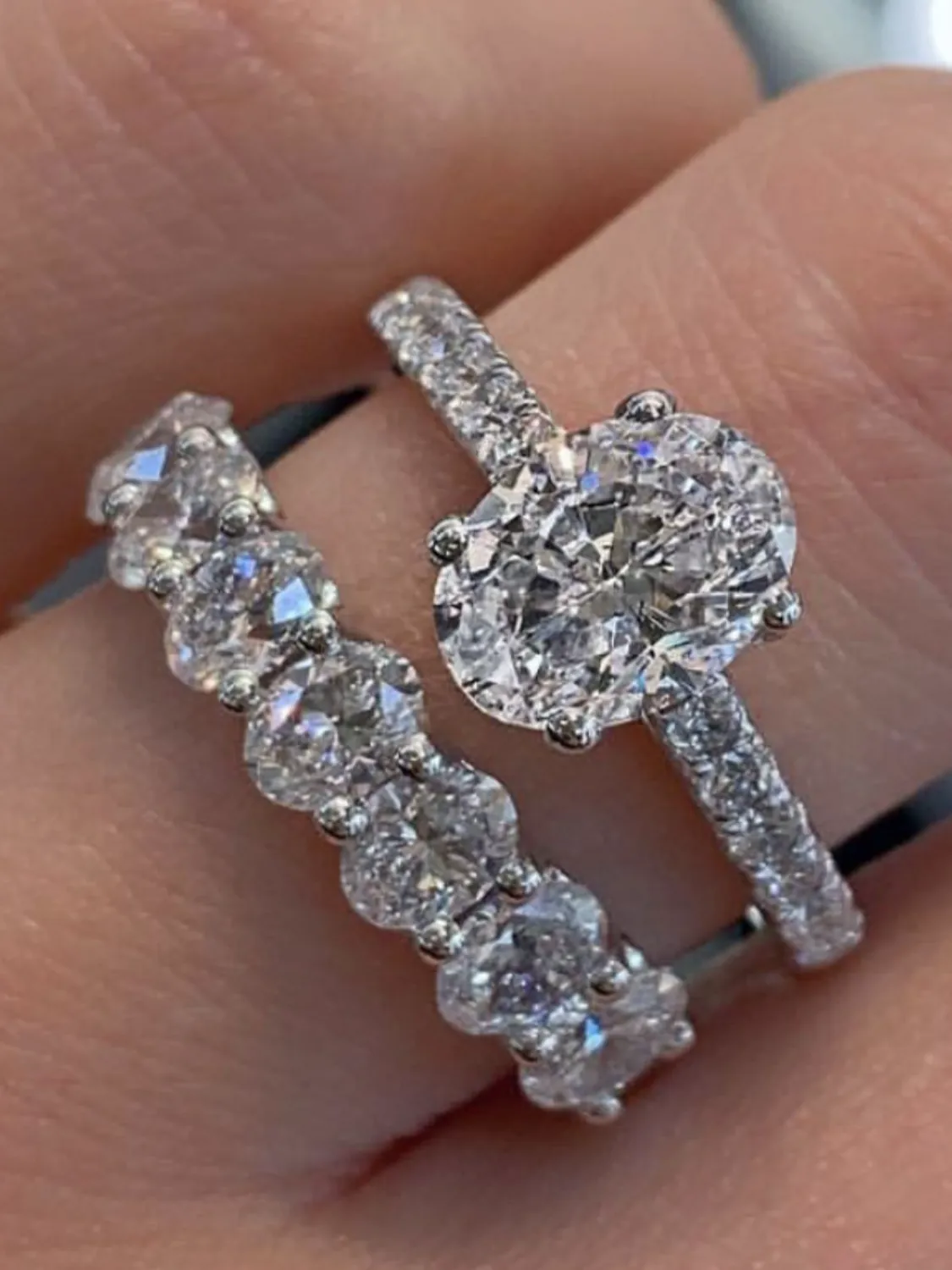
Oval and round engagement rings suit different priorities. An oval usually looks longer and often larger from above at the same carat weight. A well-cut round is a reliable choice for strong, even sparkle. Ovals are often less expensive than comparable rounds, though individual prices vary. Choose using the actual stone’s measurements, appearance and fit on your hand.
How do oval and round rings look different?
A round centre stone makes a compact, balanced shape. An oval draws the eye along the finger. Both can suit a simple solitaire or a more detailed setting, but they give the ring a different outline even when the stones weigh the same. GIA’s shape guide, checked 1 October 2026, describes the round brilliant as especially bright and the oval brilliant as an elongated shape with similar visual qualities.
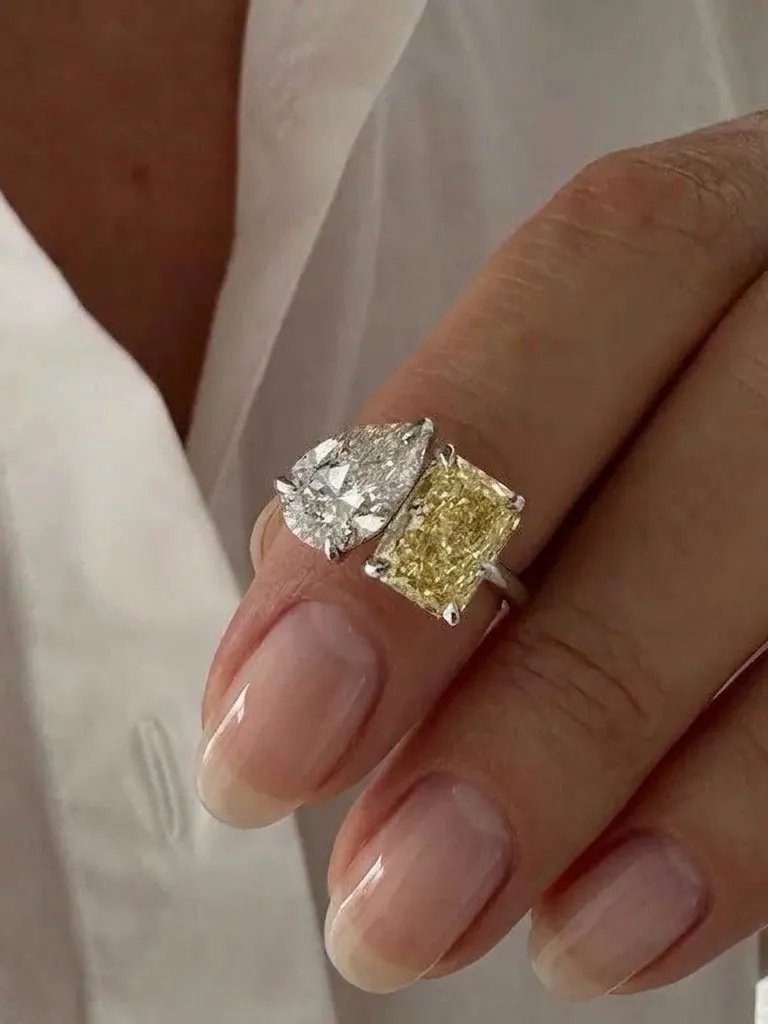
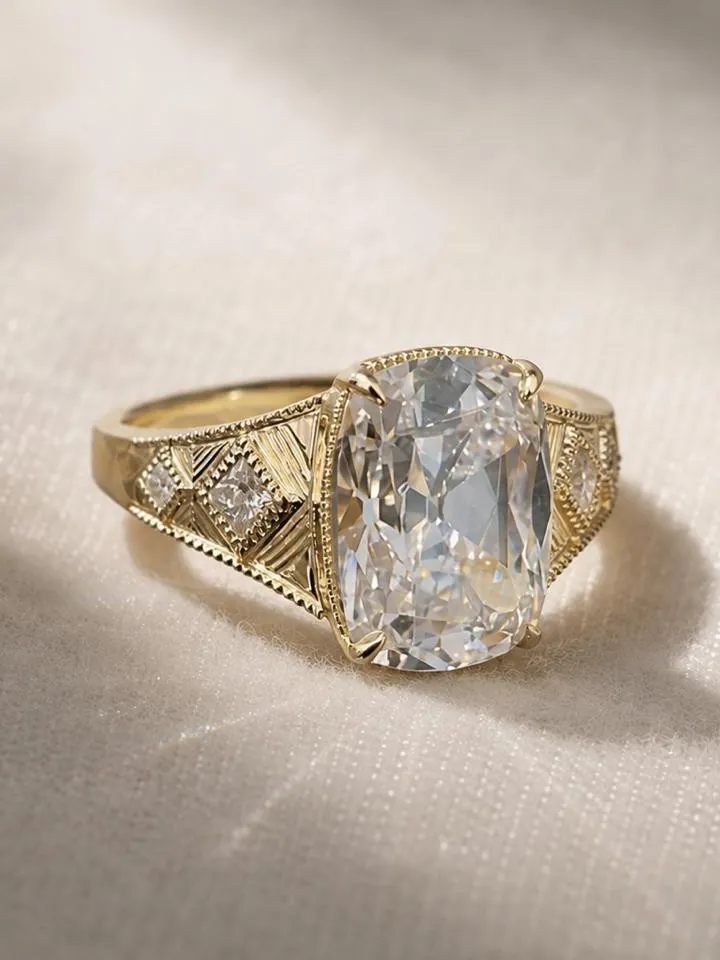
Look at the whole ring before deciding which outline you prefer. A plain band leaves the centre stone’s shape clear. A halo adds an outer edge that changes its apparent size. A band set with small stones adds sparkle around either shape. The photograph above shows an oval centre beside a band of larger round stones; the two outlines read differently even when worn together.
If you have saved a particular setting, separate what you like about the stone from what you like about its band. You may be drawn to the oval in one photograph but prefer the plain setting around a round in another. Seeing both shapes in a similar setting makes that choice easier.
Does an oval look bigger at the same carat weight?
An oval often looks bigger from above than a round of the same weight. Its length is easy to notice on the finger, and GIA says an oval can have more surface area than an equal-weight round (GIA oval guide, checked 1 October 2026). That is a useful tendency, not a promise about every pair of stones.
Carat measures weight, including the part of a stone hidden below the setting. What you see from above depends on its outline, dimensions and proportions. IGI’s guide to spread, checked 1 October 2026, explains why stones with the same carat weight can occupy different amounts of visible space. An overly deep stone may carry weight you cannot see; making one too shallow can affect its brightness.
Ask for an oval’s length and width in millimetres and a round’s diameter. A long, narrow oval may make a strong first impression without covering as much width as you expected. Compare stones from above at the same image scale if you are choosing online. Our guide to why equal-carat stones look different sizes explains why the weight on a report cannot settle the visible-size question.
Does the oval’s length-to-width ratio matter?
The ratio tells you whether an oval looks broad and soft or long and slim. Divide its length by its width: an 8.0 mm by 5.6 mm oval, for example, has a ratio of about 1.43. Those dimensions are an illustration of the calculation, not a recommended size for any carat weight.
GIA describes ratios from 1.30 to 1.40 as a rounder-looking oval, while 1.40 to 1.50 gives a more elongated outline (GIA oval guide, checked 1 October 2026). The ratio is a way to describe taste. It cannot tell you the stone’s actual size: two ovals can share a ratio while having very different dimensions.
Check the curves as well as the number. An oval should look balanced from end to end. Flat or bulging areas along its sides can change the outline in ways a ratio will not reveal. If one oval looks pleasing in a photograph and another with the same ratio looks awkward, trust the visible difference and inspect both stones more closely.
Which shape sparkles more?
A well-cut round brilliant is the more predictable choice if strong, even sparkle is your first priority. Its standardised cutting style has been studied extensively, and GIA grades the overall cut of round brilliants on a scale from Excellent to Poor. Cut affects brightness, coloured flashes and the pattern of light and dark seen as a stone moves (GIA cut-grade guide, checked 1 October 2026).
An oval brilliant can sparkle beautifully. GIA says ovals are commonly cut with 57 or 58 facets, like a standard round brilliant, but their facet arrangements and proportions vary. GIA does not give oval stones an overall cut grade on its reports; it records polish and symmetry instead (GIA oval guide, checked 1 October 2026). Those grades help, yet neither shows exactly how lively a particular oval looks.
Compare movement, not just a still photograph. Ask to see both stones rocked gently under ordinary light as well as brighter light. Watch whether the oval stays bright across its ends and centre. For the round, look for a balanced pattern rather than assuming its shape alone guarantees sparkle. IGI notes that a stone with generous visible spread can still look less bright if its proportions let light escape (IGI, checked 1 October 2026).
What is the bow-tie in an oval stone?
A bow-tie is a darker pattern across an oval’s centre. Some contrast is expected. A broad, dark patch that dominates the stone is more likely to bother you, particularly when the ends look bright. GIA explains that the pattern partly comes from the viewer blocking light and that its prominence changes with the stone and viewing position (GIA oval guide, checked 1 October 2026).
A still image can miss the problem or exaggerate it. Ask for a short video with the oval moving slowly, then watch the centre as it tilts. Does the darker area change with the light, or does it remain the feature you notice first? Also look at the stone at a normal viewing distance. A close-up is useful for inspection, but it is not how you will usually see the ring on a hand.
The bow-tie is one reason I would not choose an oval by ratio and carat weight alone. Two stones with similar numbers can give a different impression when they move.
Is an oval engagement ring cheaper than a round one?
An oval is often less expensive than a comparable round brilliant, but there is no dependable percentage to subtract from a round-ring quote. GIA says round brilliants are often among the most expensive shapes and that fancy shapes, including ovals, can be more budget-friendly (GIA cost guide, checked 1 October 2026). GIA also describes ovals as typically more affordable than equal-carat rounds in its shape guide, checked the same day.
For a fair comparison, keep the stone type, carat weight, colour and clarity reasonably close. Then look at each stone’s visible dimensions and appearance. A lower-priced oval with a distracting bow-tie may be a poorer choice for you than a smaller, lively round. A bright oval with a pleasing outline may give you the look you want at a lower stone price.
Compare the complete ring too. GIA notes that the setting, extra stones and labour affect its cost (GIA cost guide, checked 1 October 2026). A plain oval solitaire and a round ring with a halo do not isolate the price of the centre stone. Ask for matched designs or an itemised explanation of what differs. The guide to custom jewellery costs gives more context on what goes into a quote, though it is not an oval-versus-round price list.
Which shape suits which hand?
An oval set lengthwise along the finger can make the finger appear longer. GIA describes that visual effect in its oval guide, checked 1 October 2026. A round has no long axis to direct the eye, which can give it a balanced look on a wide range of hands. Finger length alone should not decide your ring.
Try to compare shapes at a similar visible size. An oversized sample oval and a small sample round will mostly tell you which size you prefer. Notice how far the stone reaches across your finger, how much band remains visible on either side and whether the setting sits comfortably beside any other ring you wear. A photograph taken straight above the hand can help you compare outlines; a side view shows the height of the setting.
Orientation changes the effect of an oval. Set along the finger, it emphasises length. Turned across the finger, often called an east–west setting, it emphasises width. If you already love round stones, there is no hand shape that rules one out. Choose the outline you enjoy seeing at a glance, then adjust the band and setting around it.
How do the setting and wedding band change the choice?
A setting can make either shape feel quieter or more prominent. A plain band gives the centre stone room to stand out. A halo creates a larger combined outline, while a stone-set band adds light along the finger. GIA notes that settings and accent stones affect both appearance and the finished ring’s cost (GIA cost guide, checked 1 October 2026).
Think about a wedding band before approving an engagement-ring design. The shape of the centre stone does not, by itself, tell you whether a straight band will sit close to the engagement ring. The height and construction of the setting matter. If a close fit is important, show the jeweller the band you own or describe the band you intend to add.
Metal colour and band width also change the view. A wider band can make a centre stone look more compact; a very fine band can make its outline seem more prominent. Those are design effects, not differences in carat weight. ENBOM DIAMONDS makes 18ct gold as standard and 14ct gold on request. Our 18ct versus 14ct guide covers that separate choice.
What should you check before choosing a specific stone?
Start with the measurements on its independent report, then inspect its appearance. For an oval, note length, width, ratio, outline and any distracting darkness across the centre. For a round, note its diameter and cut information. Finally, see each stone move. Measurements help you narrow the choice; they cannot show every light pattern.
Keep the two candidates as comparable as you can. Ask for images or videos at the same scale and under similar lighting. A stone shown under powerful spotlights beside one filmed in a dim room is a poor test of sparkle. IGI recommends considering spread and brightness together because a physically wider stone will not necessarily look larger across different lighting conditions (IGI, checked 1 October 2026).
If you are considering a lab-grown centre stone for an ENBOM DIAMONDS ring, our policy is an IGI report; natural centre stones come with GIA reports. An independent laboratory report is included in the price when the centre stone is 0.30 carat or larger. Smaller, side and pavé stones are not individually reported. The IGI report guide explains how to check the report for a particular lab-grown stone.
Where won’t this comparison help you?
An oval-versus-round guide cannot tell you which individual stone looks better. A lively oval can be preferable to a dull round, and a bright round can be preferable to an oval whose centre looks too dark for your taste. The shape comparison also cannot give you a finished price without a proposed stone and setting.
Hand advice has the same limit. An oval may create an impression of longer fingers, but a photograph of someone else’s hand cannot show how its proportions will feel on yours. If you are choosing for another person, a ring they already wear can tell you more about their taste than a rule about finger shape.
Once you have a preferred outline, view actual stone options and decide on the complete ring. See custom engagement rings or the oval engagement ring page, then message me on WhatsApp with a photo or idea for your new ring.
Questions
Does an oval engagement ring look bigger than a round one of the same carat weight?
Often, yes. An oval can show more surface area and more length from above at the same carat weight. Compare the actual length and width in millimetres, though: two ovals of equal weight can look quite different, and brightness affects how large a stone appears.
Does a round engagement ring sparkle more than an oval?
A well-cut round brilliant is a reliable choice for strong, even sparkle. A well-cut oval can also be very bright, but its light pattern varies more between stones. Check an oval for a dark bow-tie across its centre and view both shapes as they move.
Are oval engagement rings cheaper than round ones?
Ovals are often less expensive than comparable round brilliants, according to GIA, but shape alone cannot predict a quote. Compare stones of similar weight, colour, clarity and cut quality, then compare the complete rings with their settings included.
Which looks better on short fingers, oval or round?
An oval set along the finger can create an impression of length. A round has a balanced outline that can look good on any hand. Try both at a similar visible size and check how each sits beside any band you plan to wear with it.
Sources
- Guide to Diamond Shapes for Engagement Rings | GIA 4Cs Checked 1 October 2026
- Oval Cut Diamond Buying Guide | GIA 4Cs Checked 1 October 2026
- How Much Should a Diamond Engagement Ring Cost? | GIA 4Cs Checked 1 October 2026
- Same Carat Weight: Visible Size Differences | IGI Checked 1 October 2026
- GIA Diamond Cut Grade: 6 Things to Know | GIA 4Cs Checked 1 October 2026