Moissanite and a lab-grown diamond are different stones. Moissanite is lab-created silicon carbide; a lab-grown diamond is crystallised carbon with diamond’s properties. Moissanite usually costs less and shows stronger rainbow flashes. A lab-grown diamond suits you if you want a diamond’s appearance and identity. Both can work in an everyday engagement ring.
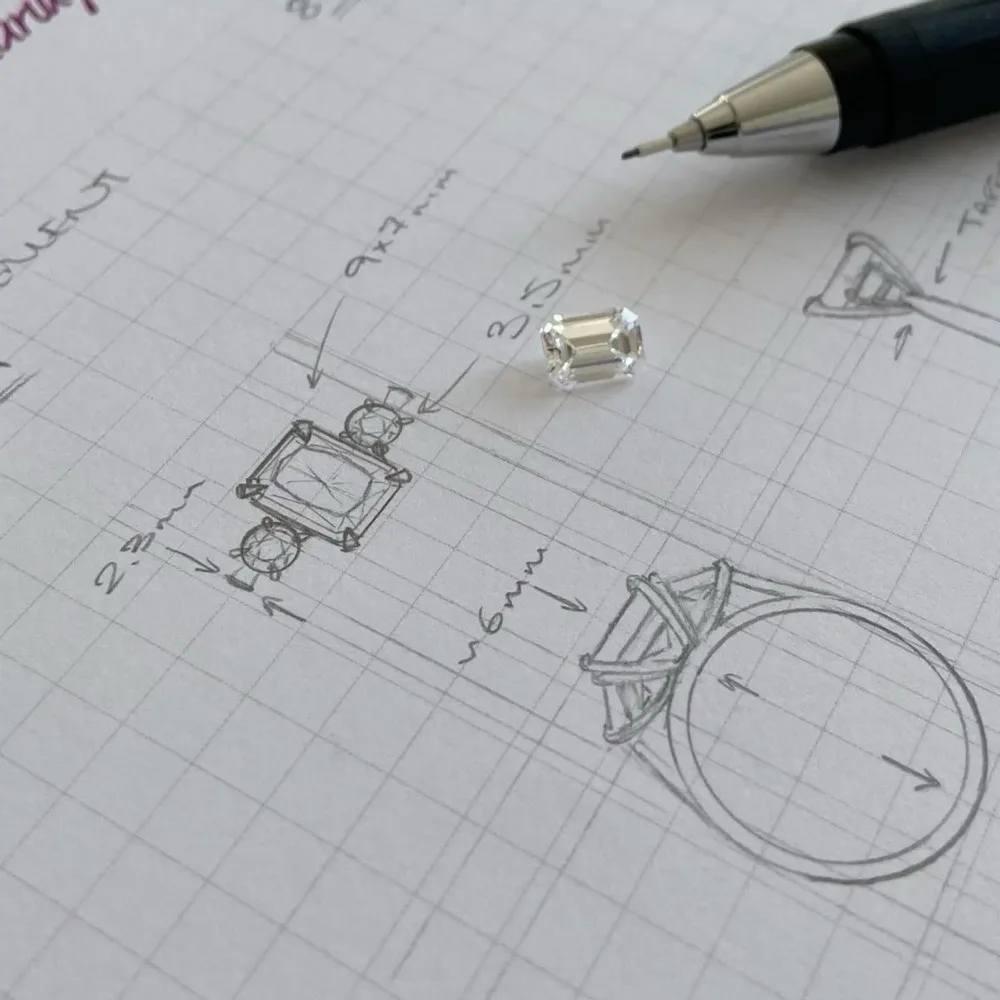
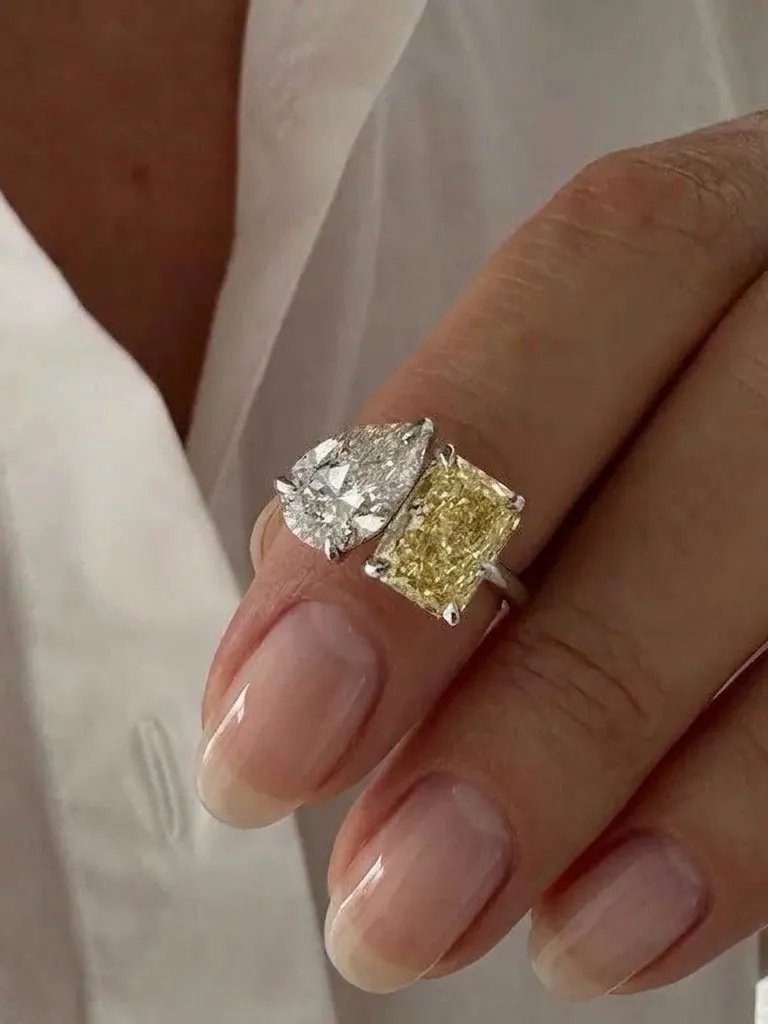
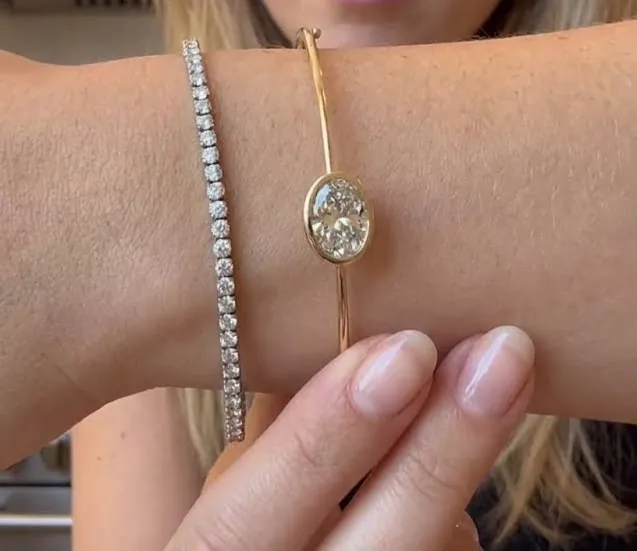
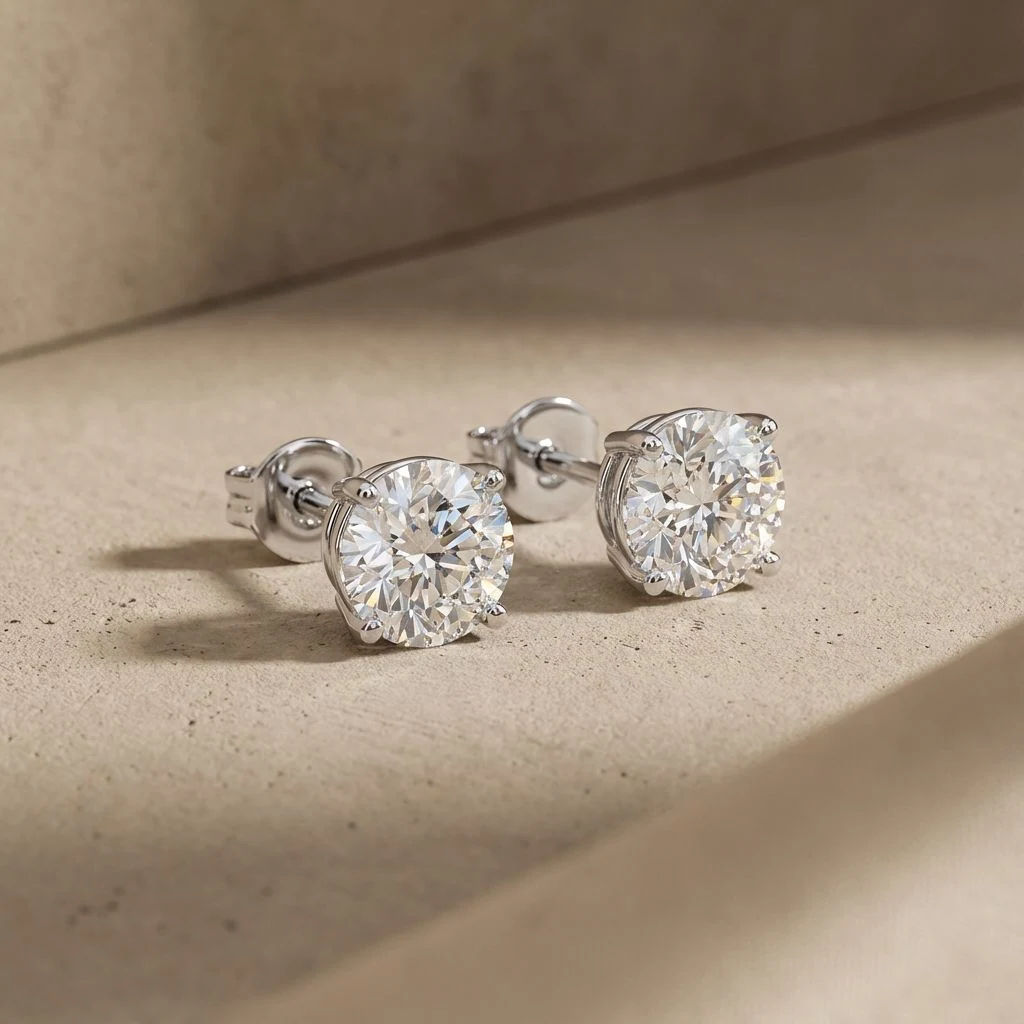
The external sources in this article were checked on 1 October 2026. The photograph shows a ring design; it is not a side-by-side comparison of the two stones.
Are moissanite and lab-grown diamonds the same thing?
Moissanite and a lab-grown diamond can look similar in a ring, but their chemical structures differ. Moissanite is silicon carbide. A lab-grown diamond consists of carbon atoms arranged in the same crystal structure as a natural diamond. GIA identifies moissanite as a diamond simulant: a different material that can resemble a diamond (GIA’s guide to simulants, checked 1 October 2026).
| What you are comparing | Moissanite | Lab-grown diamond |
|---|---|---|
| Material | Silicon carbide | Crystallised carbon |
| Origin of jewellery stones | Generally laboratory-created | Laboratory-grown |
| Appearance | Stronger coloured flashes, often called fire | A diamond’s balance of white light and coloured flashes |
| Mohs hardness | 9.25 | 10 |
| Typical stone price | Generally lower | Generally higher |
The table describes categories, not a promise about two stones you have been offered. Cut, size, colour, setting and the seller’s price all affect the choice. A photograph can show the outline of a ring while hiding the difference you might notice when you move the stones under changing light.
A lab-grown diamond is a diamond made by a different growth process from a natural diamond. GIA says the two have nearly the same chemical, optical and physical properties, though a gemmological laboratory can identify their different origins (GIA, checked 1 October 2026). That distinction matters if the word “diamond” is part of what you want to buy.
Are moissanites lab grown, and does “lab grown” mean moissanite?
Moissanite sold for jewellery is generally made in a laboratory. Natural moissanite exists, but it is extremely rare; GIA says the moissanite used in jewellery today is lab-created (GIA’s engagement-ring alternatives guide, checked 1 October 2026). “Lab-grown” alone describes an origin. It does not name the material.
That is why “lab-grown stone” is too vague on a quote. It could refer to a lab-grown diamond, moissanite or another laboratory-made gem. Ask the seller to name the centre stone in writing before comparing prices. If the piece is advertised as having a lab-grown diamond, the stone description and any independent report should say so plainly.
The wording also clears up two common questions. Moissanite can be lab-created without becoming a lab-grown diamond. And an offer for a lab-grown diamond does not mean the stone is moissanite. The manufacturing setting may be similar; the resulting gems are distinct. GIA separates diamond simulants from lab-grown diamonds on that basis (GIA, checked 1 October 2026).
How different do the stones look when you wear them?
Moissanite tends to throw more coloured, rainbow-like flashes than a lab-grown diamond. Gemmologists call those flashes fire. GIA also describes moissanite as slightly more brilliant, meaning it returns a little more white light; the difference in coloured fire is often the more noticeable feature (GIA’s gem imitation guide, checked 1 October 2026).
Neither appearance is a defect. You may enjoy moissanite’s lively flashes, especially under small, bright lights. You may prefer the balance of light you see in a lab-grown diamond. A large moissanite can make its stronger fire particularly noticeable. GIA notes that some moissanites may also appear slightly yellow or grey from certain angles (GIA, checked 1 October 2026). Those are reasons to look at the particular stone, rather than assume every example of either material looks alike.
Ask to see moving video in daylight and indoor lighting if you are shopping remotely. Keep the camera angle and lighting similar when comparing two stones. A heavily lit product clip may tell you that a stone sparkles; it is a poor basis for deciding which kind of sparkle you prefer. The cut changes what you see as well, so compare stones with a similar shape before attributing every difference to the material.
Is a lab-grown diamond more durable than moissanite?
Both stones are suitable for an engagement ring worn regularly. A lab-grown diamond has diamond’s Mohs hardness of 10; moissanite measures about 9.25. GIA describes moissanite as hard and durable enough for everyday engagement-ring wear (GIA’s engagement-ring alternatives guide, checked 1 October 2026).
Mohs hardness measures resistance to scratching. It is not a countdown to when a ring will wear out, and the gap between 9.25 and 10 is not a simple percentage of extra durability. Both stones can still be chipped by a hard blow. The setting has work to do as well: exposed corners, a high-mounted centre stone and loose prongs present different practical questions from the stone’s hardness.
If you use your hands heavily at work or in sport, discuss the setting and your routine with the jeweller. Choosing the harder stone does not settle whether a tall ring will catch on clothing or take knocks. For daily wear, the useful question is how the whole ring will be worn and maintained.
Is moissanite cheaper than a lab-grown diamond?
Moissanite is generally the cheaper centre stone, but a universal “moissanite costs X% less” figure would be unreliable. Brilliant Earth and Charles & Colvard both sell moissanite and lab-grown diamonds and describe moissanite as the lower-priced option (Brilliant Earth, Charles & Colvard, checked 1 October 2026). They are sellers, and their broad comparisons are not a quote for your ring.
Compare the finished pieces, then look inside each quote. A ring’s total also includes its metal, setting, side stones and making. Saving on the centre stone need not reduce the finished price by the same proportion. A cheaper stone in a more elaborate setting could produce a higher total than a simpler ring with a lab-grown diamond.
For a useful comparison, ask for the same band and setting in the same metal. State the centre stone’s visible dimensions in millimetres, not only a carat figure. Ask what each quote includes: the stone’s identity, any grading or identification report, side stones, delivery and charges that may be payable separately. If one seller quotes only a loose stone and another quotes a completed ring, their totals answer different questions.
There is no ENBOM DIAMONDS moissanite price to set beside one of our lab-grown diamond quotes: we do not sell moissanite. Our article on custom lab-grown diamond jewellery costs explains how we quote pieces and shows real past prices, but those prices are not a matched moissanite comparison.
Can you compare a moissanite and a lab-grown diamond by carat weight?
Carat is weight, not the width you see on a hand. Moissanite and a lab-grown diamond have different densities, so stones with the same face-up dimensions can have different carat weights. In a GIA study published in 1997, round brilliant stones of the same proportions and 6.50 mm diameter were estimated at about 1.00 ct for diamond and 0.91 ct for moissanite (GIA’s study, checked 1 October 2026). That is a material comparison, not a current price example.
Start with millimetre measurements and the shape you want to see on your finger. Then consider how the cut carries the stone’s weight and light. Even two lab-grown diamonds with the same carat weight can look different in size from above. Our guide to why two one-carat stones look different explains what to check beyond the weight.
A label such as “one-carat equivalent” on moissanite may describe an approximate visual size rather than the stone’s actual weight. Ask for the actual measurements and weight separately. Those figures let you compare what you will see with what you are being charged for.
What can a report tell you about the stone?
A report for a lab-grown diamond can establish its identity and record properties that help you compare it with another lab-grown diamond. IGI’s grading process records measurements, carat weight, colour, clarity and cutting details, and identifies laboratory-grown origin on stones it grades (IGI, checked 1 October 2026). You can use its report number to look up the digital report.
Read the description before the grades. A paper headed “lab-grown diamond” supports a different claim from a seller’s card describing a moissanite. A report also describes the particular stone submitted to the laboratory; it does not turn every small stone in the ring into an individually reported stone. Our guide to checking an IGI report walks through the number and the details to match.
At ENBOM DIAMONDS, our policy is IGI reports for lab-grown diamonds. A centre stone of 0.30 carat or larger comes with an independent laboratory report included in the price. Smaller centre stones, side stones and pavé stones are not individually reported. Check the report terms for the specific ring rather than assuming every stone has its own document.
A report is useful evidence about identity and characteristics. It does not decide which appearance you like more. Nor can a generic “certificate” supplied by a seller, without a clear issuing laboratory and report number, answer every question about the centre stone.
Which is better for an engagement ring?
Moissanite is a sound choice if you like its pronounced rainbow fire and want a generally lower-priced centre stone. A lab-grown diamond is the choice if you want a diamond’s material and appearance without choosing a natural diamond. Both are hard enough for regular ring wear. “Better” depends on what you want the ring to be and what you enjoy seeing on your hand.
Try separating the decision into three questions. Do you want the stone itself to be a diamond? Which pattern of sparkle do you prefer when the stone moves? What is the total for the ring design you actually want? The first question settles the material. The second needs a fair visual comparison. The third needs specified quotes.
Do not let a claim about one stone’s price answer a question about the other stone’s beauty. Equally, a higher hardness score does not make every lab-grown diamond ring the better everyday design. If an oval centre is what caught your eye, the oval engagement-ring page shows that design direction; the stone and setting still need to be specified for your own piece.
If you are considering a lab-grown diamond, the lab-grown diamond guide is the next place to compare diamond options. If you prefer moissanite’s appearance, seek a jeweller who offers moissanite and will identify it clearly on the quote. You should be able to make that choice without anyone describing one material as the other.
What does ENBOM DIAMONDS make?
ENBOM DIAMONDS makes new custom jewellery with lab-grown diamonds. We use 18ct gold as standard and can make 14ct gold on request. Natural diamonds can be sourced by request, subject to availability. We do not sell moissanite, so we cannot quote a moissanite version of one of our rings.
You can start a new piece with a photograph or an idea. For a lab-grown diamond centre stone, ask about the shape, measurements and report before deciding on the setting. We provide an individual quote for the proposed piece; a quote is valid for 14 days. The quote should give you a real figure for your design, rather than an average drawn from unrelated rings.
That scope matters when reading this comparison. It explains what moissanite may offer even though we do not make moissanite jewellery. If its lower price and stronger coloured fire are the features you most want, there is no reason to disguise that preference. If you want a custom ring with a lab-grown diamond, we can discuss its stone and design with you.
Where will this comparison not help you?
This article cannot identify a stone from a photograph or authenticate one you already own. Appearance alone may not settle the question. GIA’s research found that moissanite samples could register as “diamond” on conventional thermal testers, which is why a simple tester result should not replace proper identification (GIA’s study, checked 1 October 2026).
The comparison also cannot predict the resale price of either stone, calculate a particular ring’s environmental impact or tell you what an unspecified design will cost. Those questions need separate evidence. For a purchase, begin with the stone’s written identity, its measurements, any relevant report and a quote for the complete ring.
Explore custom engagement rings or send Ksenia your ring idea on WhatsApp.
Questions
Is moissanite a lab-grown diamond?
No. Moissanite is silicon carbide, while a lab-grown diamond is crystallised carbon. Both can be made in a laboratory, but they are different gemstones. If you want a lab-grown diamond, check that the quote and independent report identify the stone as one.
Are moissanites lab grown?
Moissanite used in jewellery is generally created in a laboratory. Natural moissanite exists but is extremely rare. The word 'lab-grown' describes how a stone was made; it does not tell you whether the stone is moissanite or a lab-grown diamond.
Is moissanite cheaper than a lab-grown diamond?
Moissanite is generally the less expensive centre stone, though there is no dependable price ratio for every pair of stones. Compare quotes for the same visible dimensions and a similar setting, with the stone, metal and any report stated separately.
Which is better for an everyday engagement ring?
Both are suitable for everyday wear. Choose moissanite if its stronger rainbow flashes and usually lower price appeal to you. Choose a lab-grown diamond if you want a diamond's carbon crystal structure and its appearance. The setting and how you wear the ring matter too.
Sources
- Simulants, Moissanite and Lab-Grown Diamonds | GIA 4Cs Checked 1 October 2026
- An Introduction to Imitation Diamonds & Other Gems | GIA Checked 1 October 2026
- Diamond Alternatives for Engagement Rings | GIA 4Cs Checked 1 October 2026
- Synthetic Moissanite: A New Diamond Substitute | GIA Gems & Gemology Checked 1 October 2026
- Moissanite vs. Lab Diamond | Brilliant Earth Checked 1 October 2026
- Moissanite vs Lab Created Diamonds | Charles & Colvard Checked 1 October 2026
- Diamond Grading Process | IGI Checked 1 October 2026