Long clean lines
A quieter kind of light
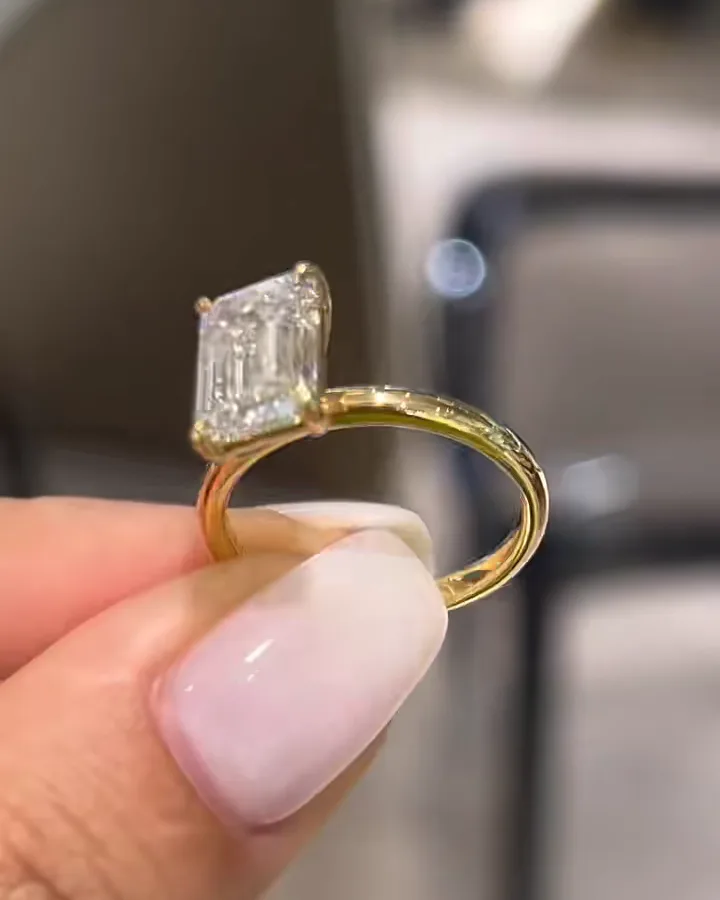
An emerald cut engagement ring is defined by its rectangular outline, cropped corners and long step-cut facets. It gives flashes of light a more ordered pattern than a round brilliant. For a custom gold ring, pay close attention to the stone’s face-up proportions and clarity, then choose a setting and wedding band that keep its lines clear.
Message Ksenia ↗A photo, a link or a few words is enough to start.
Which proportions suit an emerald cut?
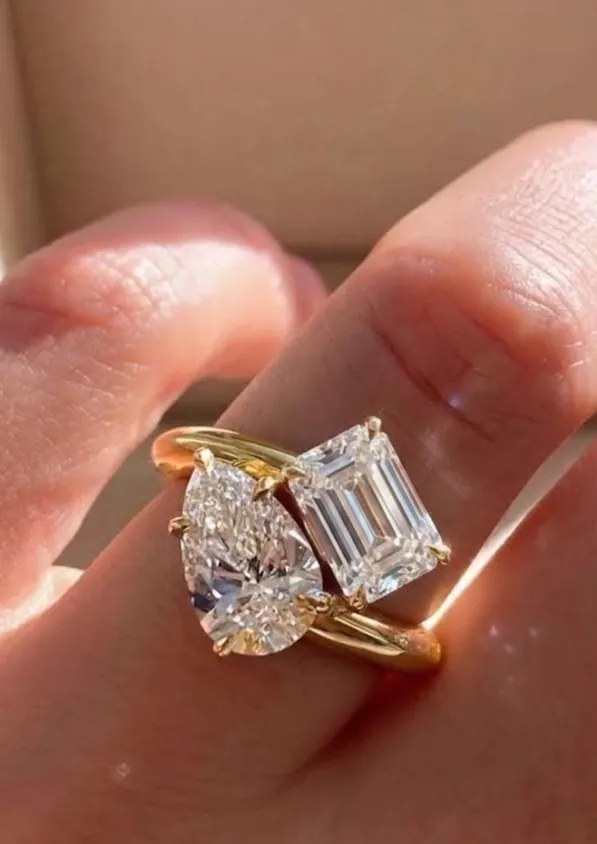
Begin with the rectangle, not a target carat weight. A short emerald cut feels broad and graphic; a long one puts more emphasis along the finger. Look for even cropped corners and a centred pattern of parallel facets. Then view the stone in ordinary light, where uneven dark areas may be easier to notice than under a display light. The photographed Pear and emerald-cut two-stone ring ring shows how an emerald-cut outline works beside a pear. A proposed emerald-cut solitaire would need its own stone and setting decisions. GIA’s guide to engagement-ring shapes.
Why does an emerald cut show clarity more?
An emerald cut is a step cut. Its larger, more open facets give the eye a clearer view into the stone than the busier facets of a brilliant cut. Inclusions and body colour can therefore be more apparent. GIA advises paying particular attention to clarity in an emerald cut, especially at lower grades. A report provides the grade, but the face-up view tells you whether a particular inclusion draws your eye. Compare proposed stones on appearance as well as their paperwork. This applies whether you are considering a natural or a lab-grown emerald-cut diamond. GIA on step cuts and clarity.
Should the setting use claws or a bezel?
Four discreet claws can leave the emerald cut’s cropped corners easy to see. A bezel draws a firm gold line around the rectangle and can make the ring feel more architectural. Compare both from the top and the side: the side view shows how high the stone sits and what space a wedding band may have beneath it. ENBOM DIAMONDS makes 18ct gold as standard, with 14ct on request. If you prefer yellow gold, discuss the metal colour while comparing stones; GIA notes that a stone’s colour appearance is influenced by its surroundings, including the setting. GIA on diamond colour and settings.
What wedding band belongs beside these straight lines?
A plain straight band repeats the emerald cut’s calm geometry. A band set with small stones introduces texture without changing the centre’s outline. If you want the two rings to touch, the engagement ring’s head and the band should be planned together; a low rectangular setting can leave a gap. Send a photo or idea for the new ring, and include the wedding band if you own it already. We can discuss the stone and metal, prepare an individual quote and review the design before production. See how a custom piece is made.
Questions
Short answers.
Can an emerald cut engagement ring use a lab-grown diamond?
Yes. Specify a lab-grown emerald-cut diamond when discussing the new ring. The cut’s long facets make the individual stone worth examining closely, whatever its origin. Ask to compare the proposed stone face-up, its measurements and its grading information. The photographed two-stone ring on this page demonstrates a shape pairing; it does not set the specifications for your order.
Does an emerald cut sparkle less than a round brilliant?
The light pattern is different. Round brilliants have many smaller facets that produce a busier pattern of sparkle. An emerald cut’s steps create broader, more orderly flashes. GIA describes step cuts as revealing colour and clarity more readily than brilliant cuts. Choose the pattern you enjoy seeing in daily light rather than expecting the two cuts to behave alike. GIA’s cut-style explanation.
Is the highest clarity grade necessary?
No single grade guarantees that an emerald cut will look right to you. Position, size and visibility of an inclusion matter when the stone is viewed face-up. GIA notes that the step cut can make inclusions more obvious in lower-clarity stones. Compare actual candidates and their reports, then decide whether a visible difference justifies a different grade. GIA on emerald-cut clarity.
Will a straight wedding band sit flush?
It may, depending on the engagement ring’s profile. The rectangular outline does not determine the gap by itself. A raised head can leave room for a straight band; a lower bezel may meet it differently. If a close fit matters, show the band you intend to wear and review both rings from the side before the engagement-ring design is final.
Show me what you like, and I'll tell you what it costs.
A photo, a link, or a couple of words. The quote is free, and you pay when you decide to go ahead. 21 days from payment to dispatch, and delivery to Australia is included.
Message me on WhatsAppor find me on Instagram @enbom.diamonds
Or email me at ksenia@enbom.site